Reconstructing the Caryatid
AI-generated bodies, cut and painted by an industrial robot.
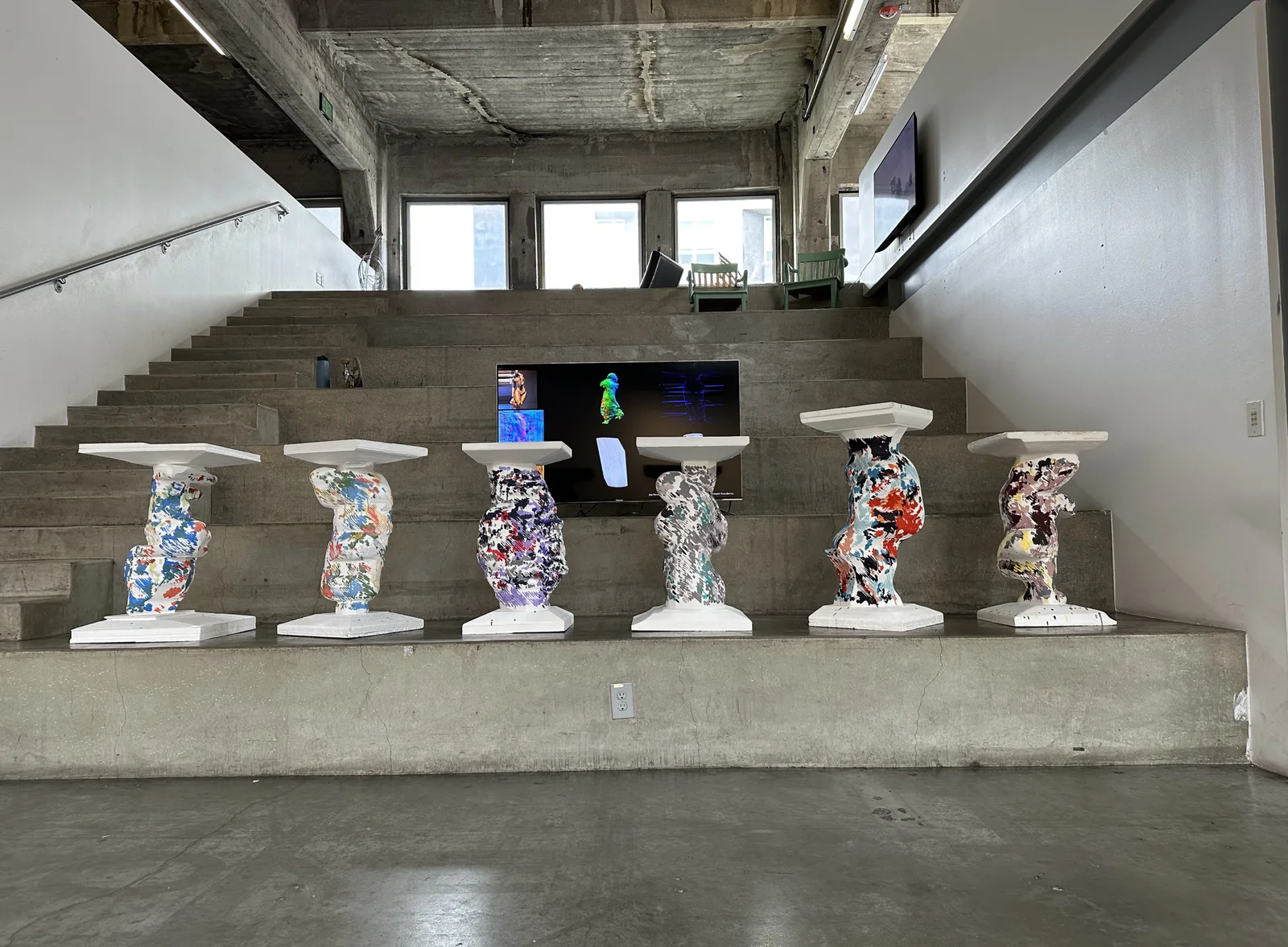
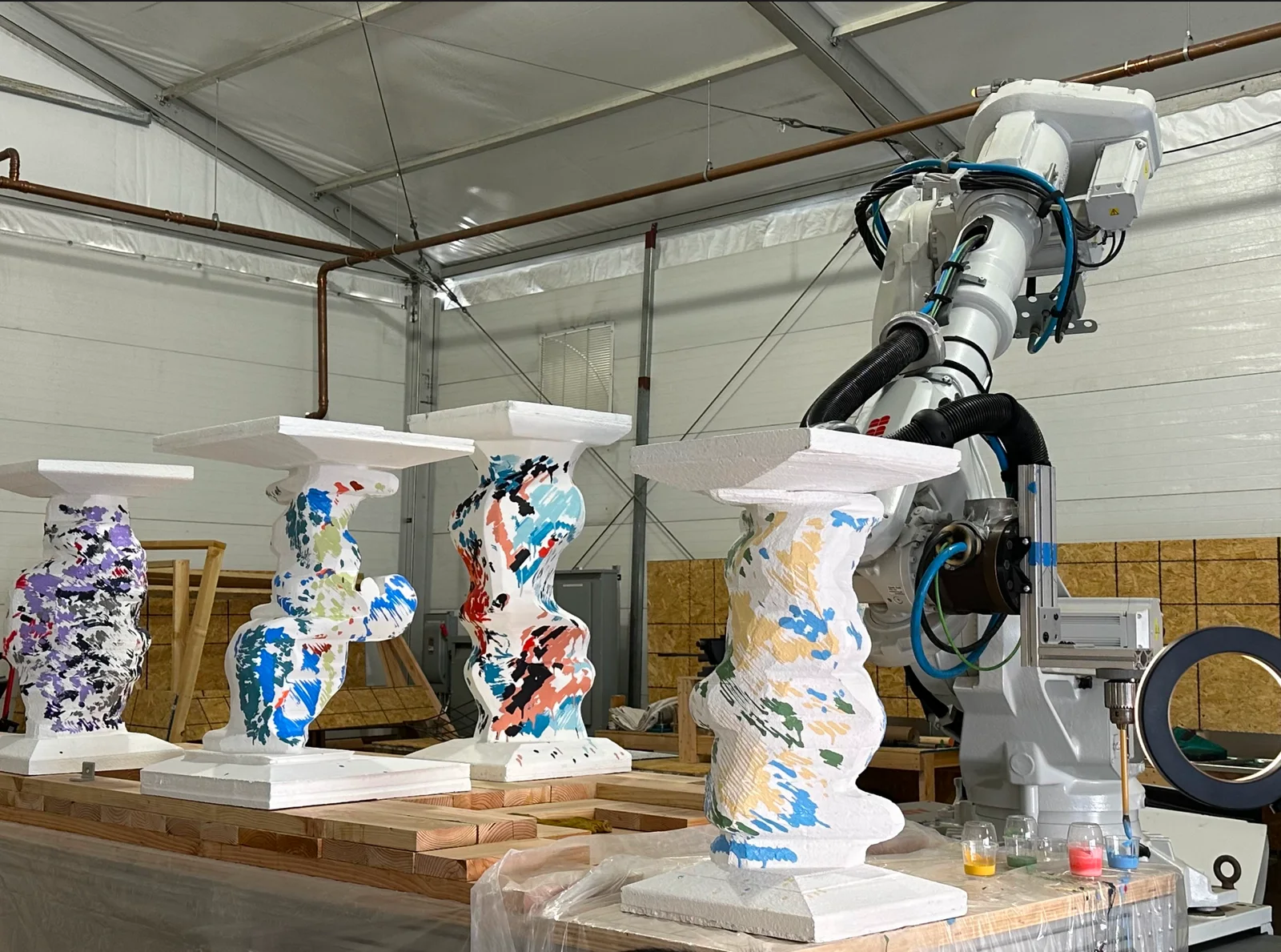
Six columns, imagined by AI and made by a robot.
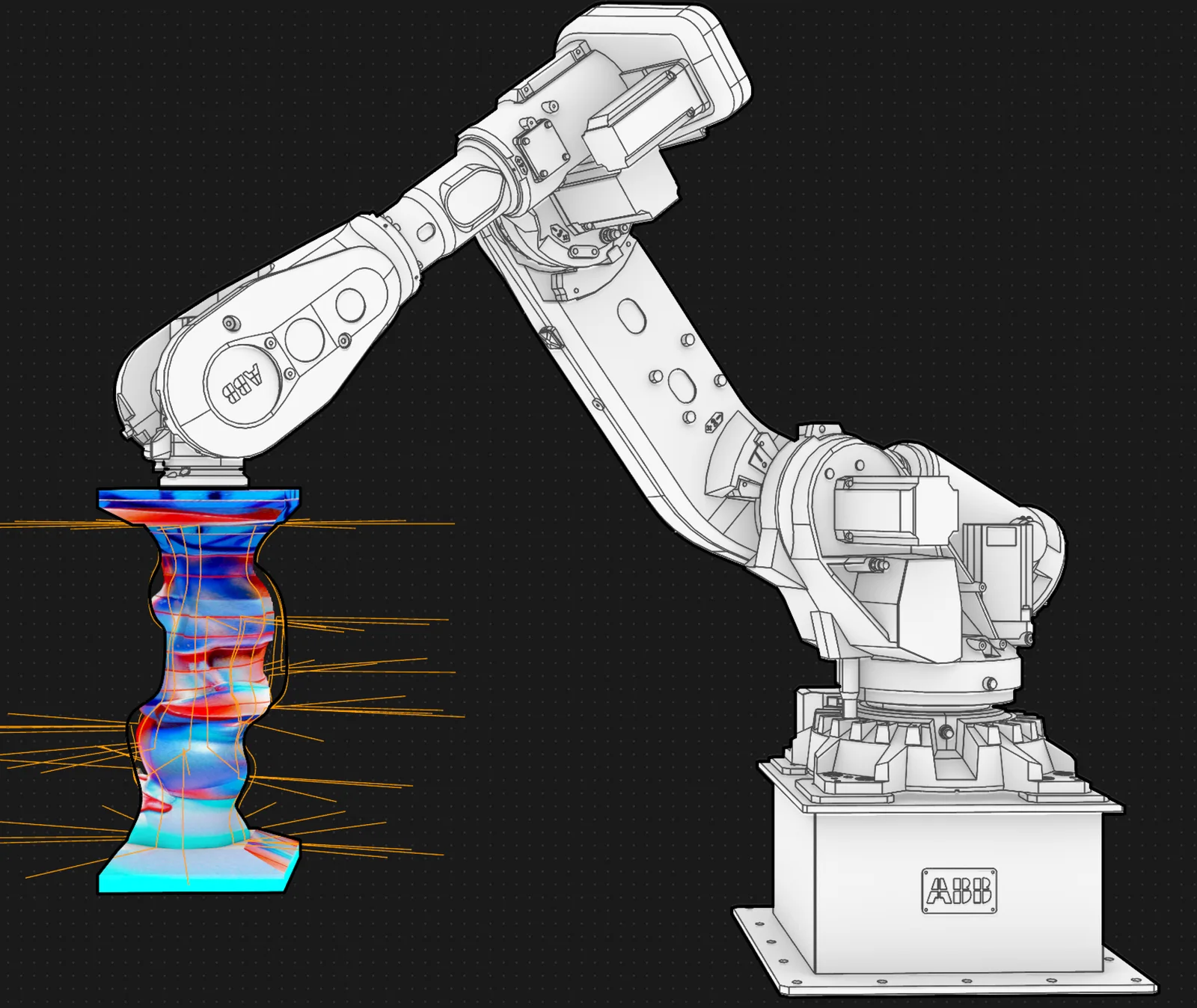
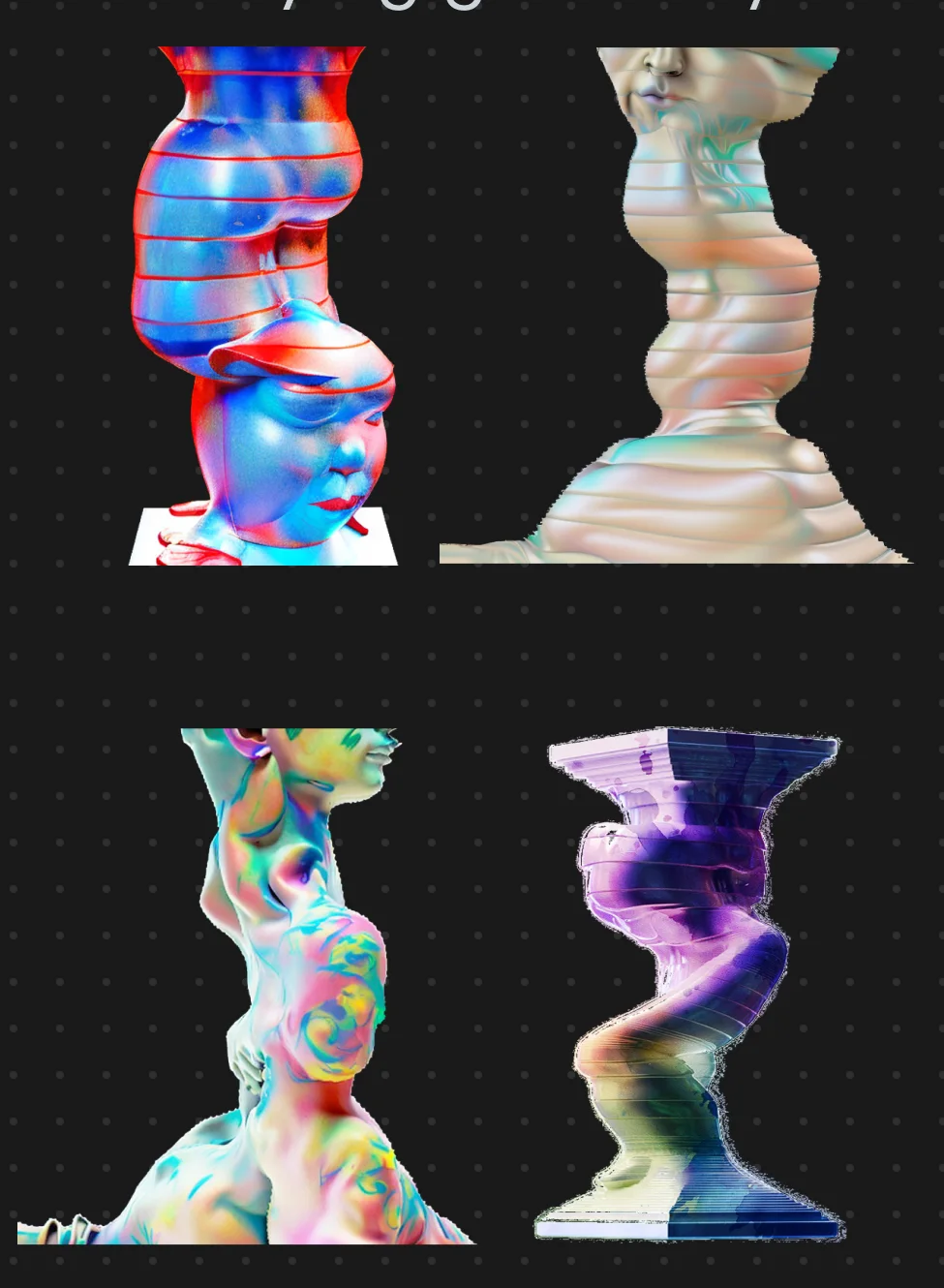
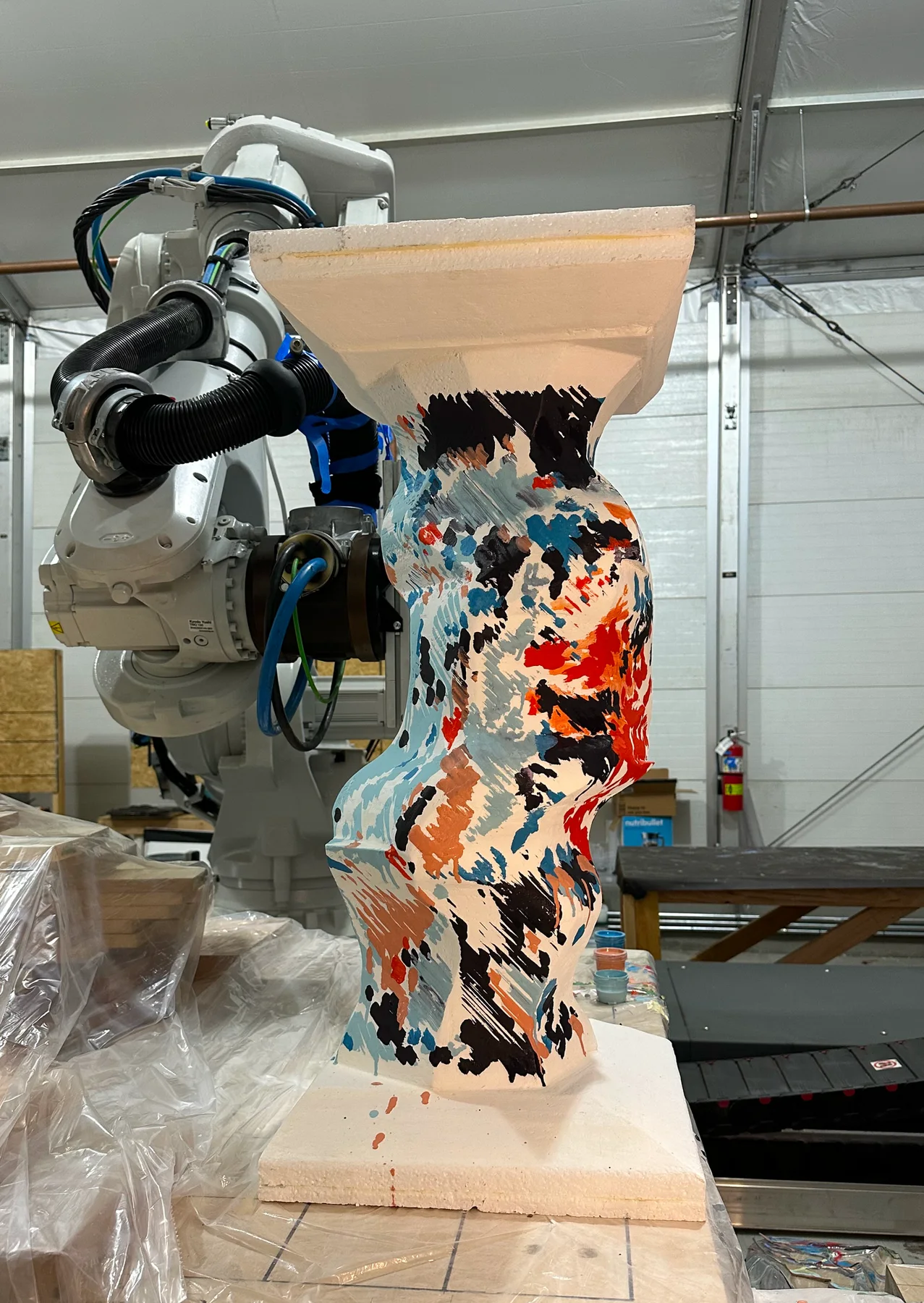
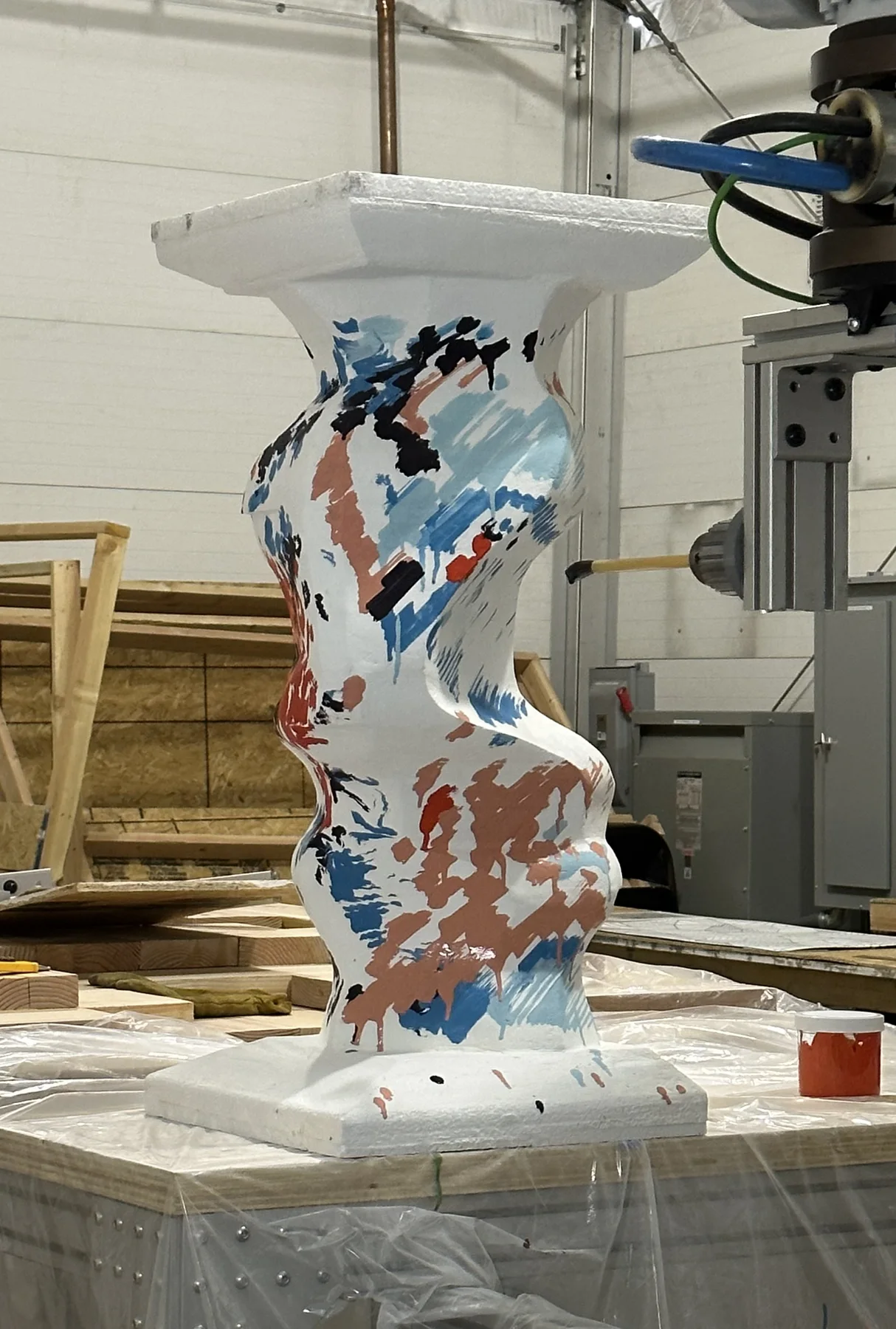
We took distorted human figures from Stable Diffusion and turned them into foam columns, like a modern caryatid. A robot cut each form with a hot wire, then painted it with strokes that a program generated.
An AI image is flat, and nobody quite made it.
Stable Diffusion gives expressive bodies, but only as pictures. We wanted to find out two things: how a flat, ambiguous image becomes a real object, and who the author is when a model and a robot share the work.
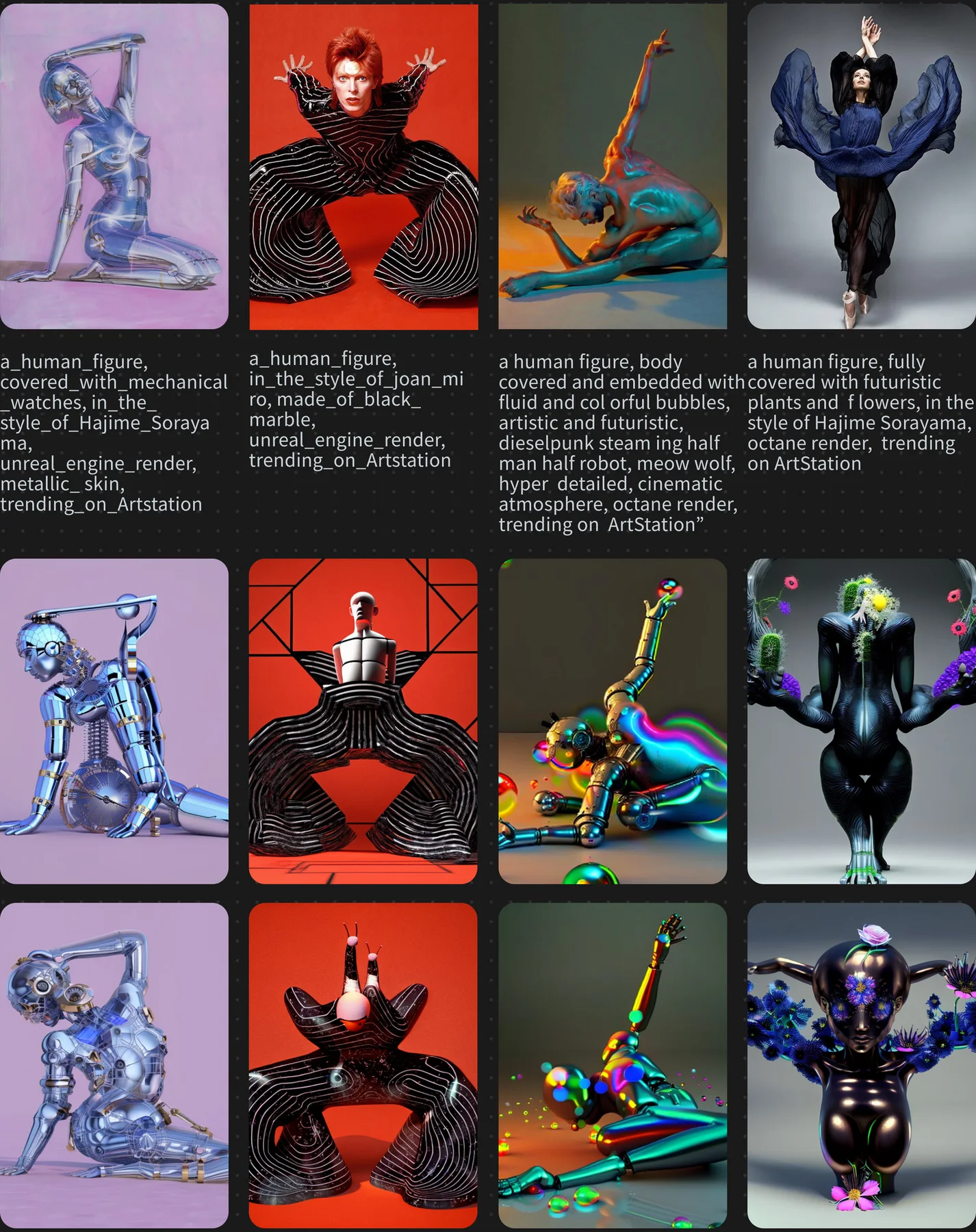
We weren’t after realism. We looked for exaggerated posture, dense contours, and surface energy that could survive the trip into foam.
The prompts stay on the page. They’re part of the record of who made what.
Six steps from prompt to paint.
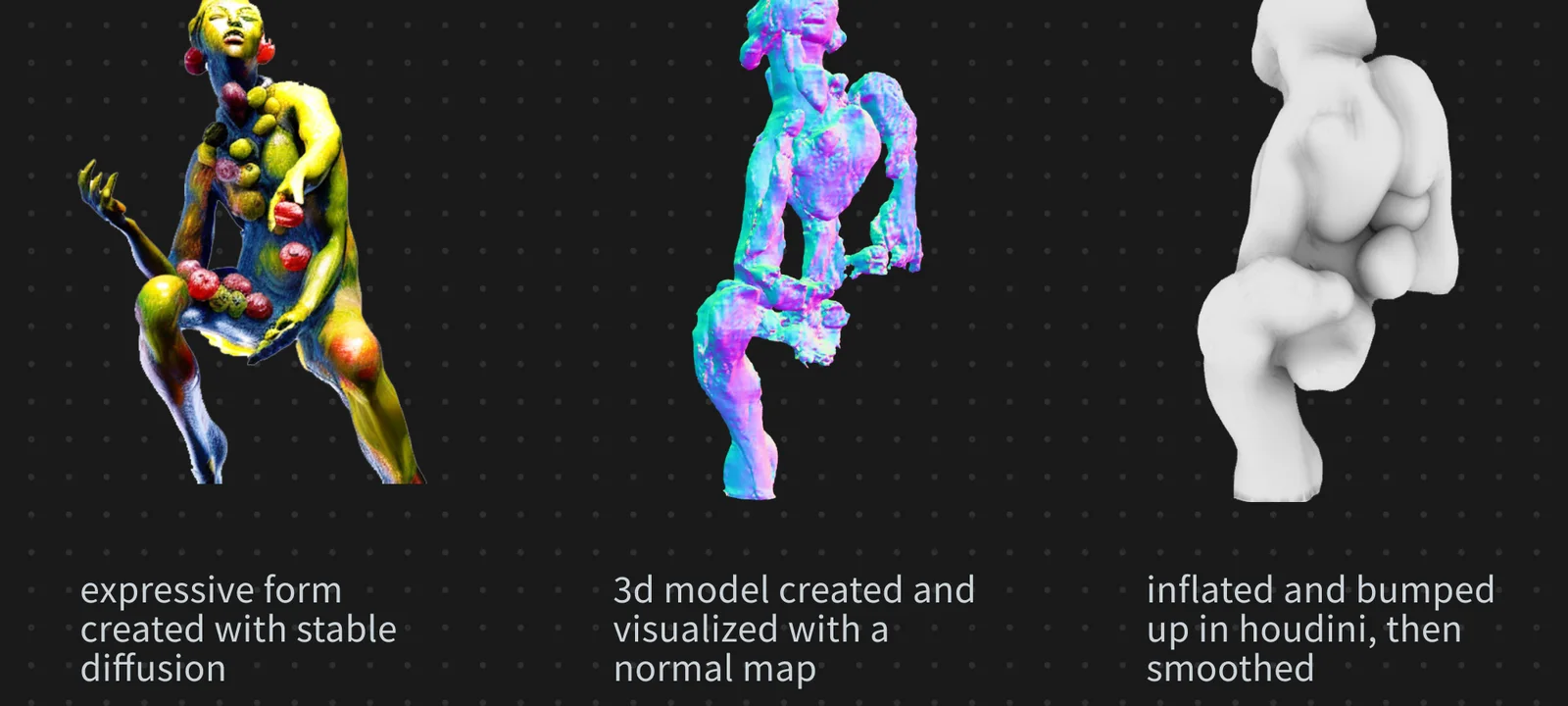
Stable Diffusion makes the figures.
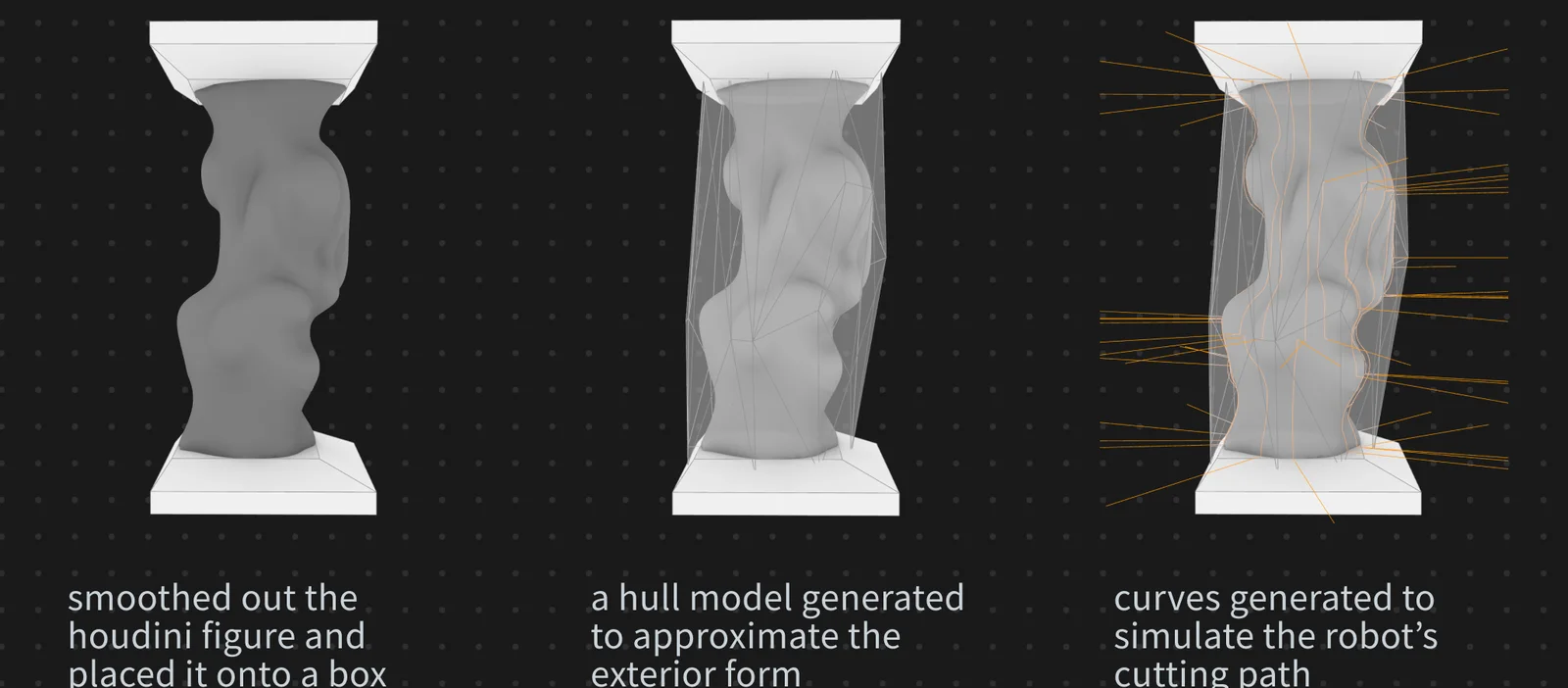
Houdini inflates and smooths them into 3D.
Grasshopper turns the form into cut lines.
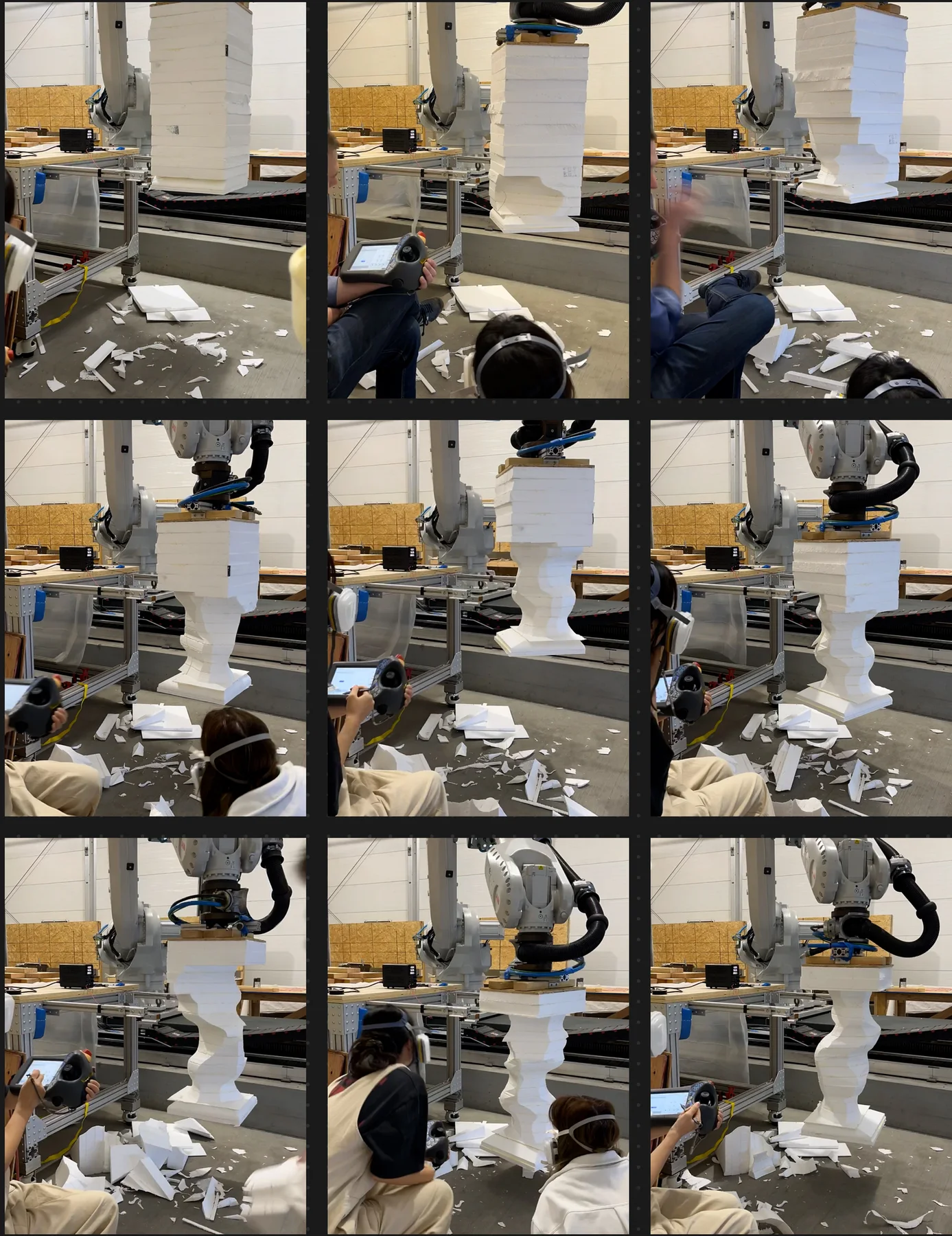
The robot hot-wires a spinning foam block.
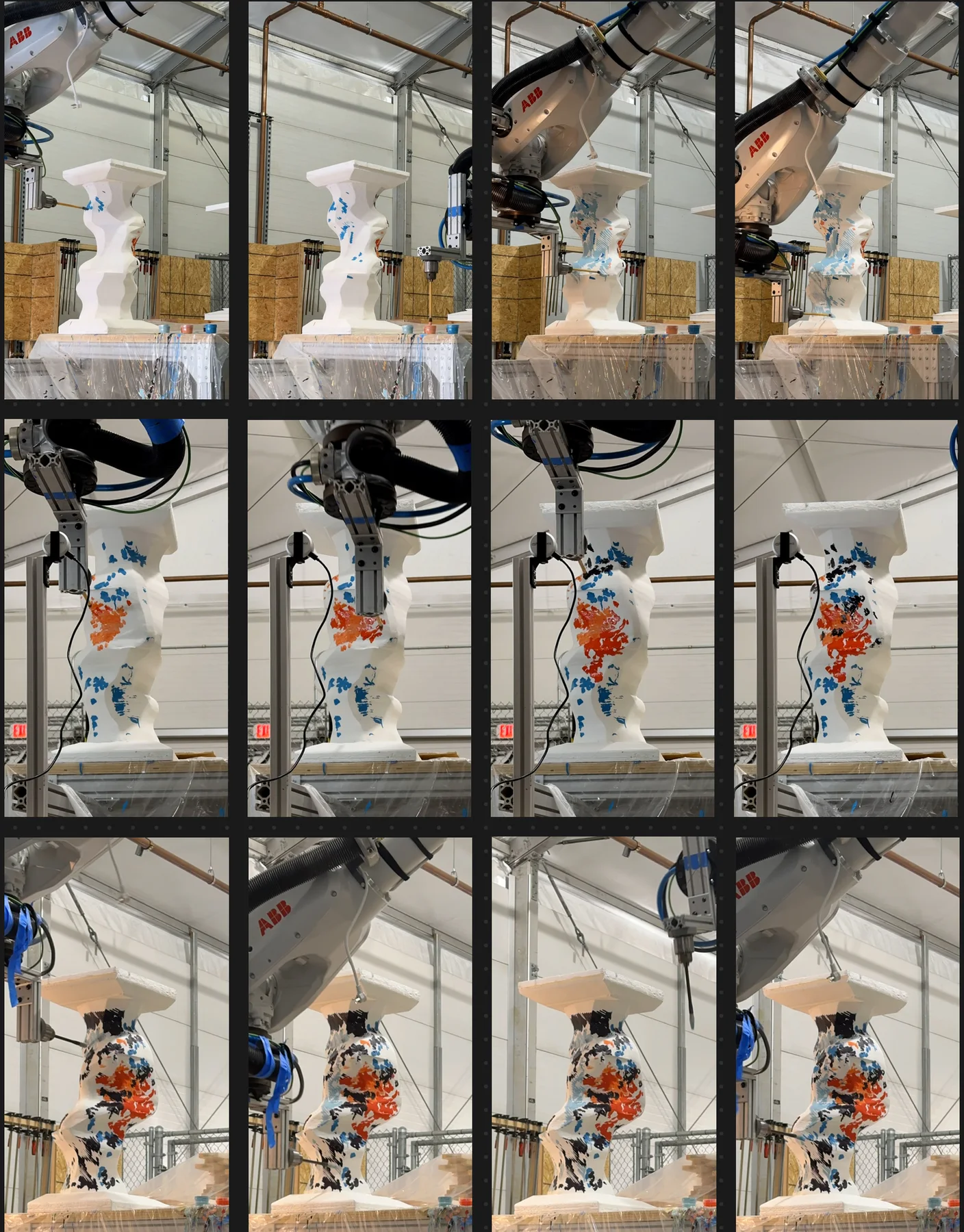
Processing agents draw strokes along contours.
The robot dips a brush and paints five colors.
The machine’s mistakes became the surface.
Melted edges from the hot wire and uneven brush marks stayed on every column. Each one shows the code, the robot, and the material at the same time.
Copyright © 2026 Anqi Wang